Wild Deer Management Specialists in wild deer management
Wild Deer Management
Christmas is over and you've lost the chance to write out a list of wanted gifts to aid your desire to start stalking. All is not lost as there’s no need to remortgage the house to buy all the kit.
Many of us, if fortunate, get the chance to start stalking in our younger years. The advantage to this is being that you're active enough to perfect your ability and to enjoy it for longer before old age and lower activity draws a close to quality proceedings.
This often means that the budding novice stalker is trying to equip themselves for stalking at the same time as equipping themselves for life and it's a sad fact that a pound can only be spent the once before it's gone. I’m sure there are many of us that at some stage have tried to spend it twice and found that it just doesn't work!
So, you want to take up stalking and buy a few magazines, go with a friend who stalks already and you realise that you need some kit. At this stage you might visit a gun shop or two and peruse over the shiny kit held in cabinets with price tags that wouldn't look out of place on a small car. You will speak to or read of people telling you that you must have this or that item, "you just won't be any good without it!"
Slow down! Let's take a careful look at what you really NEED
There's one really important piece of equipment that isn't mentioned above, but is the most valuable, and that is your mind. With this attuned to the right attitude and knowledge you can do without a lot of the stuff that others think compulsory.
New or second hand is your choice. The secondhand market has some real bargains within it but you do need to be careful. Many a rifle is sold because it's "gone off the boil" and the owner has lost faith in it. After a really good clean with copper solvent many of these prove to have nothing wrong with them and they will go on to give someone sterling service.
How accurate does your rifle really need to be? If you are shooting muntjac from highseats or fallow in woodland the distances may be no more than 50 to 60 mtrs for most shots. The accuracy standard for the DSC1 is not high and most rifles are quite capable of exceeding this standard by a very comfortable margin. These do not have to be expensive rifles, the products turned out by Remington, Ruger, Savage, CZ, Browning, Howa (to mention but a few) can be very reasonably priced but quite capable and usually available in the two most popular calibers or .243 and .308.
If flush and you've bought a rifle that is threaded you could now purchase a moderator. Not essential but extremely useful if you want to hear people talking to you at parties etc. later in life. If you don't believe me, try talking to me in a crowd, though I may not hear you! There are some stalking areas where a moderator is essential and others where it's most appreciated.
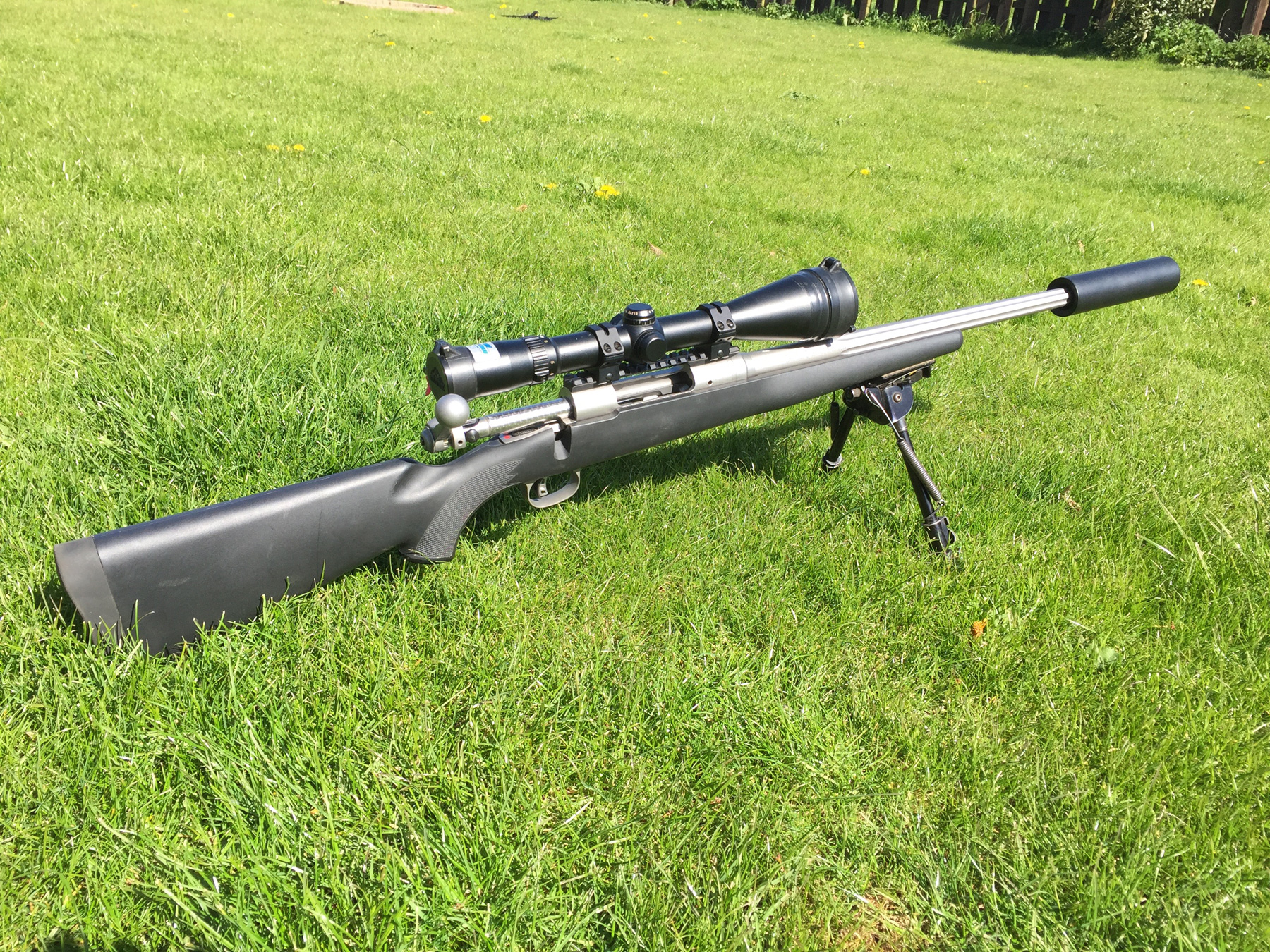
Keep it simple, don’t go for anything large or complicated as this just increases the cost and reduces the useful life before you want to change it. There's a following recently to fit 50 or 56mm objective lens scopes onto rifles with magnifications of up to 20x. If you really need this to shoot muntjac at up to 150 meters, then you need to get down to the opticians as you have a problem!
For standard stalking shooting at normal stalking ranges there is no need for more than 4 or 6 x magnification and a 40mm objective lens is all you need. For use in low light you require an exit pupil of approximately 7mm. To find the exit pupil you simply divide the objective lens width by the magnification so a 6 x 42mm scope gives you 42/6 = 7mm.
The other advantage of simple scopes is that there are fewer lenses for the light to go through and therefore they are more efficient at dusk than the complicated ones. I used 6x42 scopes on all my centre-fire rifles for 20 years before venturing into the realms of higher magnification and wider objective lenses. For a woodland stalking rifle I still prefer the "smaller and simple".
As to the makes to trust, well there are loads in the middle and lower price bracket that are more than capable of coping with the recoil of a centre-fire rifle. Avoid buying an air-rifle or rim-fire scope as these are not built to cope with the shock created by a centre-fire at the point of firing. There are makes out there with good warranties and very reasonable prices, £200 to £250 could get you an adequate scope. It won't have the light transmission of one of the really expensive scopes but is only a quarter of the cost. If you drop it it may not be quite as robust and the adjustments may not move as reliably but it will be adequate. One day you may be able to buy a high quality scope that will last you a life time but in the meantime enjoy what you can afford.

Wooden shooting sticks have served well for many years, are quiet, warm to handle and cost little other than time and ability. My preferred option is my tripod sticks for kneeling or sitting, though there is no reason you could not make a set that are taller for use from standing. Twin sticks from standing are adequate and a great deal quicker to use than the quad sticks that everyone is believing they need nowadays. Not that there is anything wrong with wanting to be as stable and accurate as possible but whenever I do the maths on how many easy deer don't get shot because the sticks being used are too complicated, there is a correlation. More stable sticks will allow you to shoot more distant deer humanely and effectively but easy and quick to use sticks will allow you to shoot the closer deer more quickly and with less movement, meaning less chance of spooking.
I've worked the equation out loads of times and always come back to simple and effective being better than complicated.
If the deer is further than I can comfortably shoot then I find a better rest, get closer or leave it for another day.

You only need a sharp knife to gralloch a deer. Whilst a breast bone saw is nice to have, it can be managed without. Use that mind of yours to learn where the cartilage is that connects the ribs and the sternum, then cut through those rather than saw though the bone. Its only the older animals that get difficult with the first rib fusing so needing a little more work.
As to a knife there is nothing wrong with a Mora Frost or similar knife. It has a plastic sheaf and both can be washed in hot water, and if you lose it you don't need to cry. For £15 you can get a knife to last quite a few years without too much attention other than to be kept sharp.
The above brings us to a sharpener. If you have good dexterity and ability, a good kitchen steel will keep your knife sharp in the majority of occasions. The occasional regrinding of the shoulders will need a coarse stone or diamond flat stone but not for quite a few months.
You may be unfortunate enough to have friends that spend more money than you spend on your annual holiday on the latest spanky binos from one of the leading brands, possibly fitted with a laser range finder. You may feel that without such an item you are not worthy of venturing out after deer. Good news, many of us managed to stalk and shoot deer in the past without the use of such expensive items and some of us still do!
How well do you NEED to see? A cheap pair of binos will let you see well enough in the daytime to identify your target but will be a little dark in first and last light. So long as you get the right magnification and objective lens a less expensive pair will only lose you 10 to 15 minutes at either end of the day. Ok, it may be the time when the deer decide to leave the safety of cover and if you can't identify it, don’t shoot it. Learn a bit more about deer behaviour and use this to your advantage.
When you do buy binoculars its worth getting them with the same or similar magnification to your scope. It offers the simplest use in woodland as the picture from both will be the same, making distance judging and finding and spotting targets much easier. A 4 to 8 power scope coupled with 8.5 power binoculars will work well for many years.
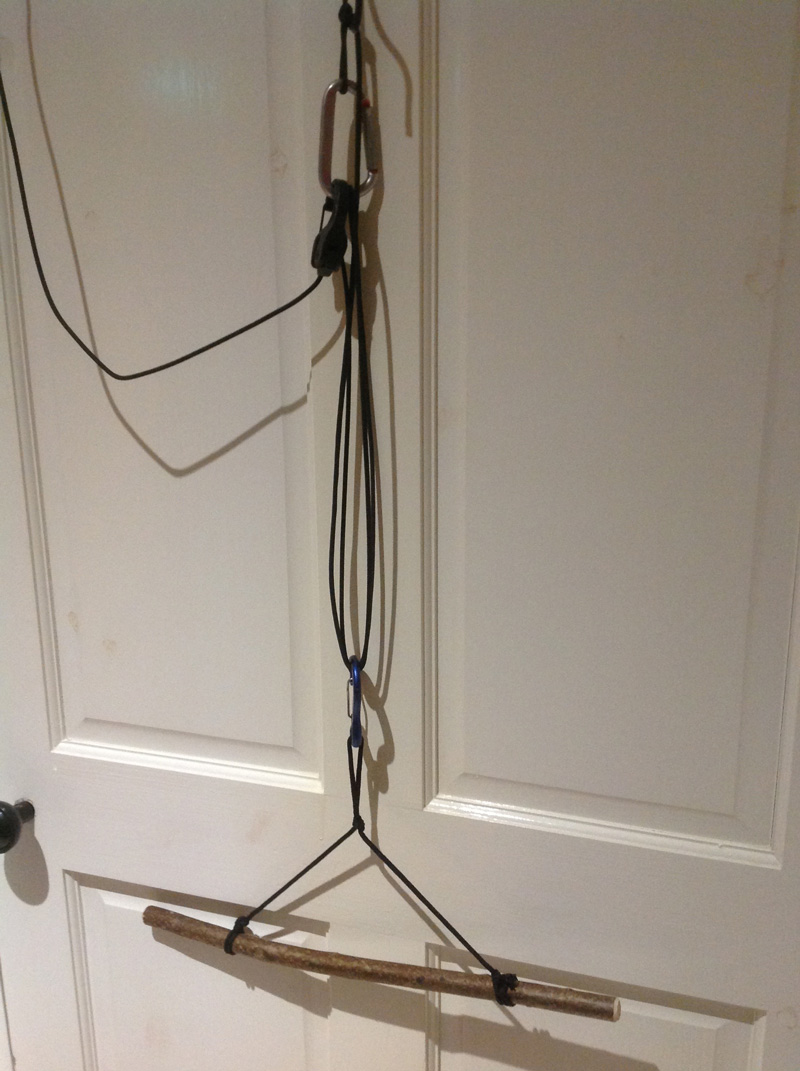
If stalking the larger species you will need to learn how to gralloch the animal on the floor unless you are going to buy and carry kit to suspend it for an elevated gralloch. With a little ingenuity and knowledge of knots and ropes you can get by with a couple of lengths of para cord and a wooden stick (this goes through the lower legs which are discarded before it goes into the larder).
The smaller deer species can be hung from a sling or piece of rope wrapped around a tree and are light enough to be elevated by hand.
If stalking on the open hill gralloching on the floor is usual as there are no trees to use.


To get the deer from the field to vehicle will need either a drag sheet, sled, or roe sack. A cheap sheet from a hardware store would suffice though likely with a short working life, an off cut of heavier sheeting will last longer. A carcass bag for roe and smaller can be fashioned from a large shopping bag such as those from Ikea etc.

Do you need waterproof clothing? How often does it rain when you are out stalking? There is plenty of inexpensive, warm, rustle-free clothing out there so go shopping, but carefully. Wool has supplied quality, quiet clothing for many years and hasn't stopped doing this just because "technical" fibres have been developed.
Wellington boots will do for some people whilst others will require boots. Personally, I use good boots by choice but have a lightweight pair of cheap boots that are used in the summer when soft footwear is useful for quiet walking. Trail shoes are used by some for this very reason. Be aware of the walking footwear that has reflective piping or tags on it, great if your running on darker roads in poor visibility but not good for stalking.
The strongest and most useful piece of equipment you possess is your brain. Knowledge and attitude are totally under your control and cost nothing. What you lack in flash kit can be replaced by knowledge of the equipment you have, the deer species you stalk, the ground and environment where they reside, their predicted movements and an understanding of their behaviour at various times of the year. This cannot be lost, stolen, left at home or taxed.
In slow time you can buy quality items that are exactly what you want, as by then you will know what is right for you.
Take pride in being good with what you have, rather than having what is good.
Andy Papworth